Today’s vehicles are more advanced than ever before. Beyond engines, transmissions, and traditional electrical systems, modern vehicles rely on a complex network of cameras, radar sensors, ultrasonic sensors, and sophisticated control modules designed to enhance safety and improve the driving experience.
These technologies, known collectively as Advanced Driver Assistance Systems (ADAS), are becoming standard equipment on nearly every new vehicle on the road. Features such as lane departure warning, adaptive cruise control, automatic emergency braking, blind spot monitoring, and collision avoidance systems all depend on ADAS components working together accurately and consistently.
Why ADAS Matters in Vehicle Repair
Vehicle repairs have changed dramatically as ADAS technology has evolved. A repair that once involved simply replacing a windshield, repairing a bumper, or installing suspension components may now require additional diagnostic and calibration procedures to ensure the vehicle’s safety systems continue to operate as designed. Even minor changes to the vehicle can affect sensor alignment and system performance.
When cameras, radar sensors, or other ADAS components are disturbed during a repair, proper diagnosis, calibration, and verification are essential before the repair can be considered complete. Technicians must understand not only how to repair vehicles but also how to restore and validate the advanced technologies that help keep drivers, passengers, and pedestrians safe.

Preparing the Next Generation of Technicians
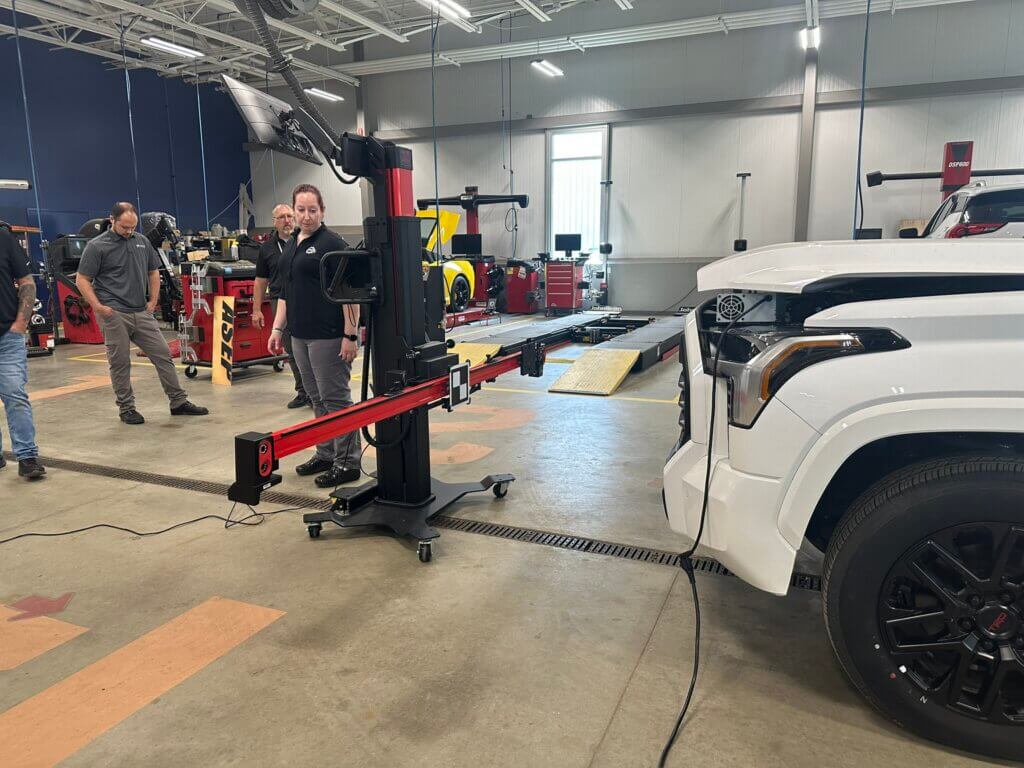
LRCC recently purchased new ADAS testing equipment that allows students to train with the latest technology used in today’s automotive industry.
“It is vital that the education we offer at LRCC prepares students for the future, not just today,” said Patrick Cate, president of Lakes Region Community College. “Adding ADAS training is another example of adapting our programs to meet real workforce needs across the Lakes Region and beyond.”
Training focuses on critical ADAS competencies, including:
- Advanced diagnostics
- Radar and sensor technology
- Camera systems
- Static and dynamic calibration
- Proper repair procedures
- Post-repair verification
By mastering these skills, students gain experience with the technologies that are rapidly reshaping the automotive service industry.
Coming Soon: ADAS Training Opportunities
For technicians, educators, and industry professionals looking to expand their expertise, ADAS training opportunities are coming soon to LRCC.
- Introduction and Sensor Fusion — Understand how ADAS sensors work together to interpret the vehicle’s surroundings.
- Diagnosis and Repair —Learn how to approach ADAS faults, identify problems, and follow proper repair procedures.
- Calibration — Explore the principles and procedures behind accurate static and dynamic ADAS calibration.
“ADAS technology has changed the way technicians approach vehicle diagnosis, repair, and calibration. Providing this training through our college allows us to serve both the next generation of automotive professionals and technicians already working in the industry,” said Jamie Decato, Lakes Region Community College’s chair of Transportation Technology. “It is an important opportunity to connect education with the real-world demands of today’s vehicles and give technicians the confidence and knowledge to work safely and effectively with these systems.”
Stay tuned for more details on upcoming ADAS training opportunities.